The Short Answer
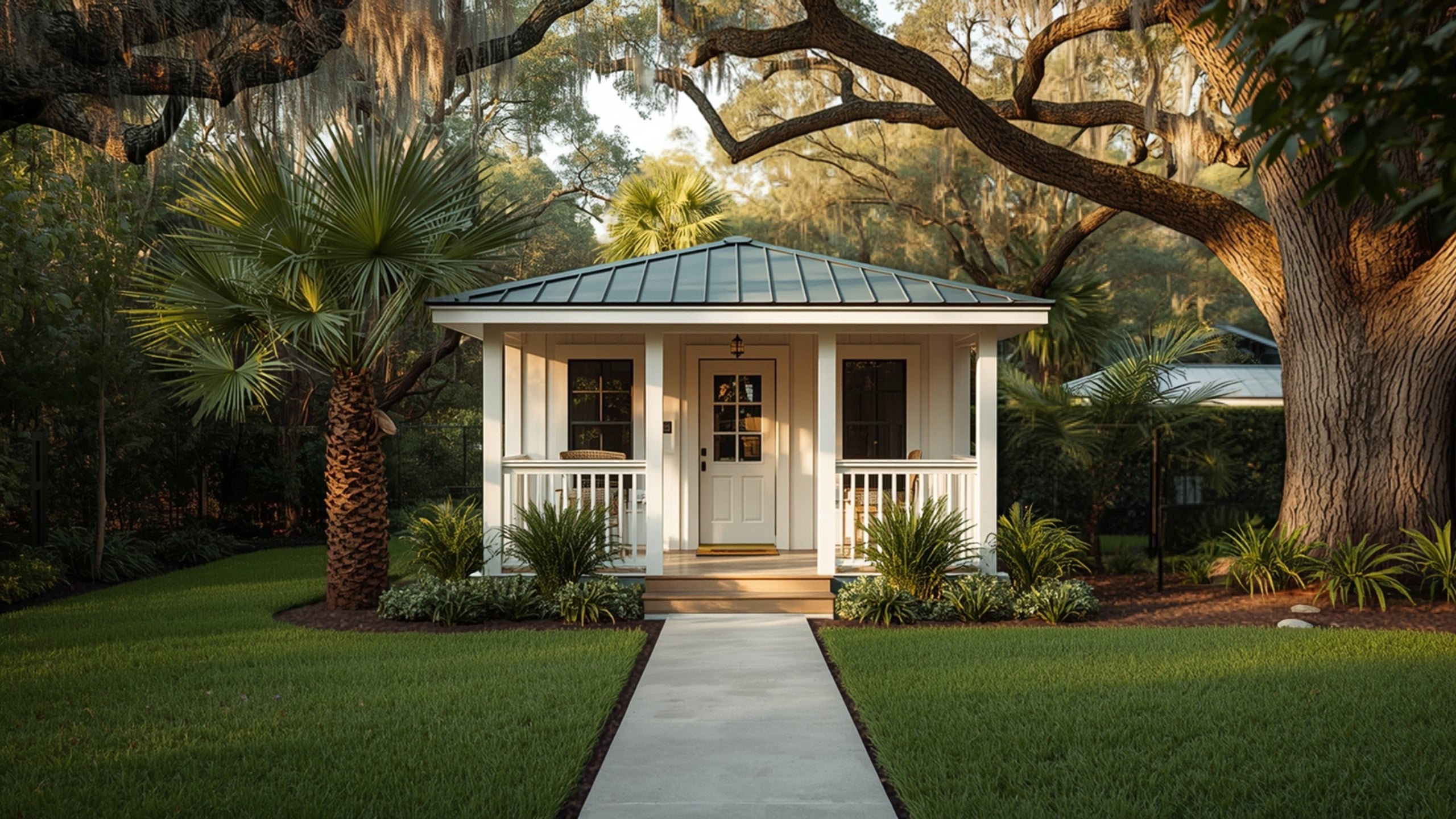
A granny pod is a small backyard cottage built so an aging parent can live close by. In Florida, the cheap prefab kits are often HUD-code or park-model units that local zoning won’t accept as a dwelling. A permitted, wind-rated unit in Tampa Bay generally runs $175,000–$350,000 all-in, and Medicare doesn’t pay for it.
You’ve seen the ads. A tidy little cottage, a smiling parent on the porch, a price that looks like a used pickup truck.
Then you call the city.
The cheapest granny pod is the one you’re allowed to live in. Everything else is an expensive shed.
What is a granny pod?
“Granny pod” is a nickname, not a building type. It means a small, separate living unit in the backyard of a family home, usually for a parent or grandparent who wants their own front door without living across town. You’ll also hear “granny flat,” “in-law cottage,” and “medical cottage.” That last one usually describes a pod marketed with built-in safety features, like grab bars, wide doors, and monitoring gear.
Your city doesn’t care about nicknames. It cares whether the unit is a manufactured home, an RV, or an accessory dwelling unit (ADU). That decides whether you get a permit.
The prefab pod problem
Many granny pod kits sold online are HUD-code manufactured units (they carry a HUD label) or park-model units, which are built more like recreational vehicles than houses. Those can be fine products. They’re just not what most Florida zoning codes accept as a backyard dwelling.
Florida does have a prefab route that works: modular. A Florida modular building is built in a factory to the Florida Building Code under the DBPR Manufactured Buildings Program. It carries a state insignia (look inside the electrical panel cover), sits on a permanent foundation, is installed by a DBPR-licensed contractor, and becomes real property. That’s a different animal from a HUD-code unit, even if the brochure photos look the same.
Here’s how the three options stack up.
| HUD-code or park-model “pod” | FBC modular unit | Site-built ADU | |
|---|---|---|---|
| Built to | Federal HUD code, or RV-style standards for park models | Florida Building Code (DBPR Manufactured Buildings Program) | Florida Building Code, on your lot |
| Label | HUD label (or RV-style label) | Florida state insignia | Permit and inspections |
| Foundation | Often piers, tie-downs, or wheels | Permanent foundation | Permanent foundation |
| Accepted as an ADU/EFR by local zoning? | Often not — check before you buy | Generally treated like site-built if it meets local rules | Yes, where ADUs or EFRs are allowed |
| Wind and flood design for your site | Limited; varies by unit | Engineered to code; site foundation still needs engineering | Engineered for your exact lot |
| Real property (adds to home value)? | Usually personal property unless converted | Yes | Yes |
| Design flexibility | Pick from a catalog | Some options; shipping limits size and shape | Full custom |
| Typical all-in cost | Low sticker price, plus site work — if it’s permittable at all | Unit price plus foundation, setting, utilities, and permits | Generally $175,000–$350,000 in Tampa Bay (2026) |
What a granny pod really costs
The kit price is not the project price. It never is.
Before anyone lives in a backyard unit, you’re paying for a foundation, utility connections, design and permitting, and site work. Design and permitting typically run 5–10% of the project. Utility taps and site work can run tens of thousands of dollars before a single wall goes up, especially if you need a separate water meter, a new electric service, or a bigger septic system.
For a quality, permitted ADU in Tampa Bay, plan on $175,000–$350,000 all-in in 2026. Garage conversions start around $175,000, attached suites run about $175,000–$275,000, and luxury detached units start around $300,000. Every lot is different, so get a real number. Our full breakdown is on the ADU cost page.
Florida wind and flood: the part the brochure skips
A pod built for a mild climate doesn’t care that you live in Tampa Bay. The building inspector does.
Design wind speeds around here are high — often around 140 mph or more (ultimate design speed), depending on your exact location. If your lot is in a flood zone, the living space has to be elevated. Either way, every unit needs engineering for its specific site: the roof connections, the wall anchoring, the foundation, the windows and doors.
That’s not red tape. It’s the difference between riding out hurricane season and ending up in your neighbor’s pool.
Tampa’s rules: ADU vs. Extended Family Residence
The City of Tampa has two paths for a backyard unit:
- Full ADU (can be rented): allowed only in designated areas. The 2024 changes expanded eligibility to include Sulphur Springs, Temple Crest, Wellswood, and parts of Riverside Heights, alongside Seminole Heights, the Lowry Park area, East Tampa, and Tampa Heights. Max 950 sq ft, and the owner must live on the property.
- Extended Family Residence (EFR): everywhere else in Tampa. Family members only, up to 600 sq ft, approved through Special Use.
For a parent, the EFR path is often the one that fits. Unincorporated Hillsborough County and St. Petersburg have their own rules. We break them all down in our Tampa, Hillsborough, and St. Pete ADU rules guide. And if you live in an HOA, its covenants apply no matter what the city allows.
Medicare won’t cover it
Let’s save you the phone call. Original Medicare doesn’t pay to build or buy a granny pod. It’s housing, not medical care. Prescribed equipment like a walker may be covered; construction isn’t.
When a granny pod isn’t the right answer
A backyard unit fits a parent who’s mostly independent and wants family close. It’s not a substitute for memory care or round-the-clock medical support, and it won’t fix isolation if nobody’s home all day. Then a care community may be the better choice, and that’s okay.
If a backyard home fits, build it for the next twenty years, not just move-in day. Our universal design spec sheet covers the details that matter.
Frequently asked questions
Are granny pods legal in Florida?
Florida law allows, but doesn’t require, local governments to permit ADUs, so it depends on your city or county. Many prefab pods are HUD-code or park-model units that local zoning won’t accept as a dwelling. A Florida modular unit or a site-built ADU that meets local rules is the safer path.
Can I put a granny pod in my backyard in Tampa?
Usually, yes, through one of two paths. Full ADUs are allowed in designated neighborhoods, up to 950 sq ft. Everywhere else in the city, an Extended Family Residence for family members only, up to 600 sq ft, can be approved through Special Use. Check your parcel on tampa.gov/ADU.
Does Medicare pay for a granny pod?
No. Original Medicare treats a granny pod as housing, not medical care, so it won’t pay to build or buy one. It may cover some medical equipment with a prescription. Some Medicare Advantage plans offer limited extras like bathroom safety items, which vary by plan.
What is a medical cottage?
A medical cottage is a granny pod marketed with built-in care features, such as wide doors, grab bars, a roll-in shower, and monitoring equipment. Zoning treats it the same as any other backyard unit, so the same permit and construction rules apply.
Is a modular granny pod the same as a mobile home?
No. A Florida modular unit is built to the Florida Building Code, carries a state insignia, sits on a permanent foundation, and becomes real property. A HUD-code manufactured home carries a HUD label and is a different category that local zoning often won’t allow as an ADU.
Backyard Homes for Family
Build the granny pod your city will approve.
We design, permit, and build backyard homes engineered for Tampa Bay.
(813) 922-2299Licensed & Insured · License# CRC1332920 | CBC1264541 | AR100677
Schedule My 30-Minute Consultation
We reply personally — usually the same business day. Your details are never sold or shared.