Prefab, Modular, or Site-Built ADU in Florida? Code, Cost and Timeline
You’ve seen the ads. A cute little backyard cottage, delivered on a truck, “installed in weeks,” at a price that makes a site-built ADU look like a luxury car. Scroll a little further and there’s a kit you can order online with free shipping.
It’s tempting. And factory-built can be a smart choice in the right situation. But the ads tend to skip the parts that cost the most and take the longest.
A factory can build the box, but it can’t build your foundation, run your utilities or pull your permits — so prefab savings are smaller than the ads suggest.
Here’s how the three main paths compare in Florida, and what every one of them still needs on your lot.
Key Takeaways
- HUD-code manufactured homes, Florida modular buildings and site-built ADUs are three different legal categories, and local zoning often treats them differently.
- Florida modular units are built to the Florida Building Code, carry a state insignia, sit on permanent foundations and are real property.
- Many “granny pod” kits are HUD-code or park-model units, which local zoning often doesn’t allow as ADUs. Check before you buy.
- Foundation, site work, utilities, permits and wind and flood engineering are needed no matter how the unit is built.
The Three Categories (and Why the Label Matters)
HUD-Code Manufactured Homes
These are what most people call mobile homes or manufactured homes. They’re built to a federal HUD code and carry a HUD label. They’re a different category from Florida modular buildings, and many local zoning codes don’t allow them as ADUs at all.
That’s the catch with a lot of online “granny pod” listings. Many are HUD-code or park-model units. Park models are typically designed as recreational or seasonal units, not permanent dwellings. A low price doesn’t help if your city won’t permit the unit on your lot.
Florida Modular Buildings
Modular units are built in a factory to the Florida Building Code, the same code a site-built home follows. They’re regulated through the Florida Department of Business and Professional Regulation (DBPR) Manufactured Buildings Program and carry a state insignia, usually found inside the electrical panel cover.
They go on permanent foundations, are installed by DBPR-licensed contractors and are treated as real property. If you want a factory-built ADU in Florida, this is generally the category to look at.
Site-Built ADUs
A site-built ADU is framed or block-built on your lot, designed for your specific setbacks, floor plan and finishes. It gives you the most flexibility on layout, materials and how the unit relates to the main house. It’s also what most custom design-build work looks like.
Wind and Flood: Every Unit Needs Engineering
Tampa Bay design wind speeds are high, often around 140 mph or more (ultimate) depending on location. Whatever you build has to be engineered for the wind loads at your site, including how it’s anchored to its foundation.
If you’re in a flood zone, the unit has to be elevated to meet current flood requirements. That affects foundation design, stairs or ramps, and accessibility for a parent who uses a walker. A factory doesn’t know your flood zone; your engineer does. For more on this, see our guide to building on a flood zone lot in Tampa.
What Every Option Still Needs on Your Lot
This is the part the ads leave out. Whether the walls arrive on a truck or go up board by board, you still need:
- Zoning approval: The unit has to fit your parcel’s ADU or family-unit rules, setbacks and size limits.
- Design and engineering: Site plan, foundation design, wind and flood calculations.
- Permits and inspections: Building, electrical, plumbing and more. Our Tampa ADU permit process guide walks through the steps.
- Foundation: Poured, formed and inspected on site.
- Utilities: Water, sewer or septic, and electric trenched from the street or the main house.
- Site work: Clearing, grading, drainage, walkways and restoring your yard.
Utility taps and site work alone can run tens of thousands of dollars before a wall goes up, and design and permitting typically run 5–10% of the project. Those costs are about the same no matter how the unit is built.
Crane Access on Tight Tampa Lots
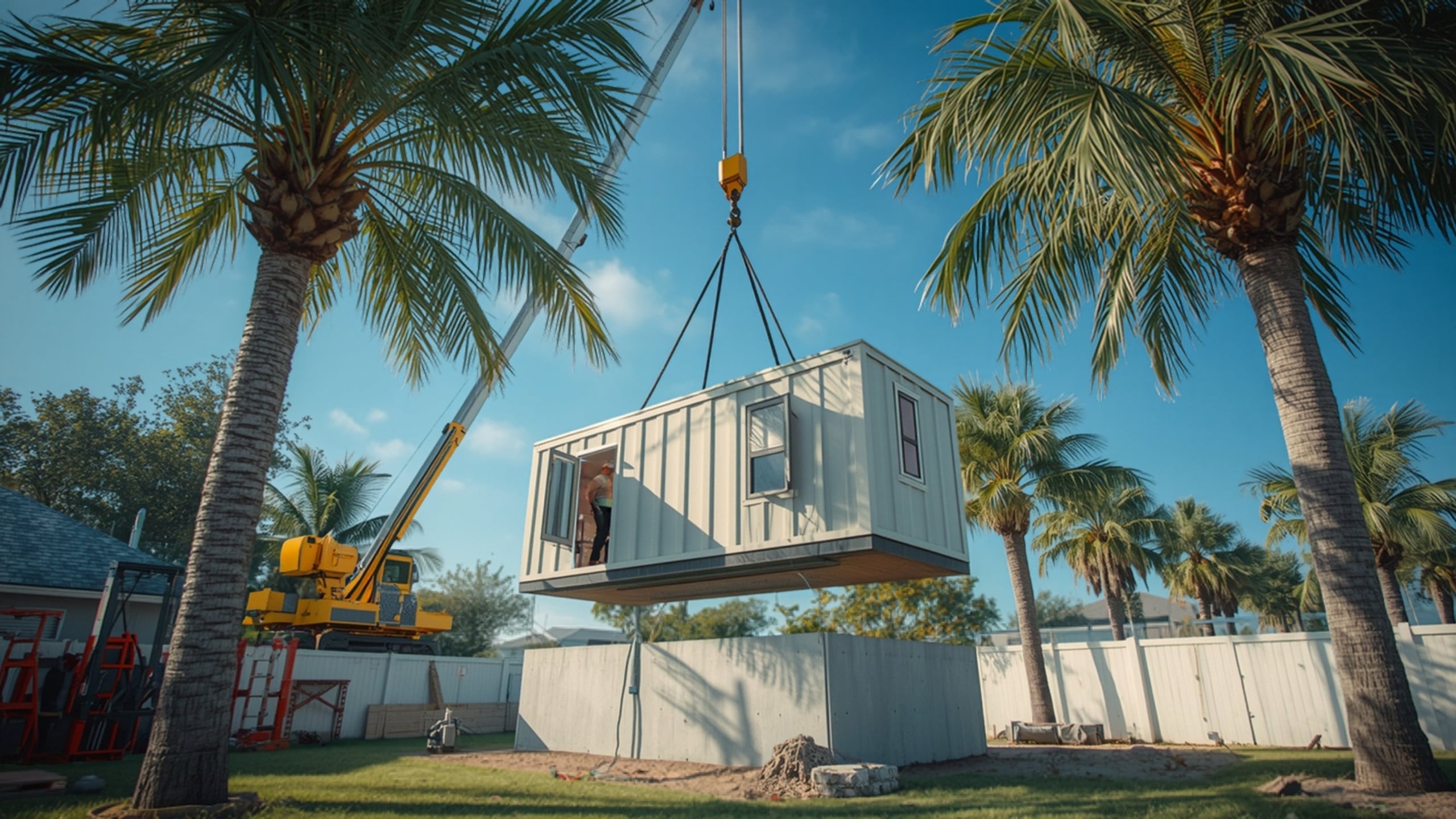
Modular units arrive in large sections and are usually set by crane. On a wide suburban lot, no problem. On a narrow lot in Seminole Heights or Tampa Heights, with mature oaks, overhead power lines and an alley in back, it can be a real puzzle.
Before you commit to factory-built, someone needs to walk your site and answer: Can the truck get in? Where does the crane sit? Will a tree or power line be in the way? If the answer is “not easily,” site-built may be the more practical choice.
Side-by-Side Comparison
| Factor | HUD-Code Manufactured | Florida Modular | Site-Built |
|---|---|---|---|
| Built to | Federal HUD code | Florida Building Code | Florida Building Code |
| Label | HUD label | State insignia (DBPR) | Local permit and inspections |
| Foundation | Varies | Permanent foundation | Permanent foundation |
| Allowed as an ADU? | Often not allowed by local zoning | Generally, if the parcel qualifies | Yes, if the parcel qualifies |
| Design flexibility | Limited | Moderate | Highest |
| Delivery and access | Truck delivery | Truck and usually crane | Standard site access |
| Site work, utilities, permits | Still required | Still required | Still required |
Cost: Where the Savings Really Are
Factory building can save on some labor and on weather delays during framing. But the foundation, site work, utility connections, permits, engineering, delivery and crane are the same or extra. When you add those back in, the gap between modular and site-built narrows.
For planning, a quality ADU in Tampa Bay generally runs $175,000–$350,000 all-in. Every lot is different; get a real number. Our ADU cost guide breaks down where the money goes.
Timeline: Overlap, Not Magic
The real timeline advantage of modular is overlap. The factory can build the unit while your site is being prepared and permits are being processed. That can shorten the total schedule.
What it can’t shorten is everything that happens before the factory starts: zoning review, design, engineering and permitting. Those take the same time no matter how the unit is built. “Installed in weeks” usually means after all of that is done.
Frequently Asked Questions
Is a modular ADU cheaper than a site-built ADU in Florida?
Sometimes, but usually by less than the ads suggest. Foundation, site work, utilities, permits and engineering cost about the same either way, and modular adds delivery and crane costs. A quality ADU in Tampa Bay generally runs $175,000–$350,000 all-in.
What is the difference between a modular home and a manufactured home in Florida?
Florida modular buildings are built to the Florida Building Code, carry a state insignia, go on permanent foundations and are real property. Manufactured homes are built to the federal HUD code and carry a HUD label. Local zoning often treats them differently.
Can I put a granny pod kit in my backyard in Tampa?
Check before you buy. Many granny pod kits are HUD-code or park-model units, which local zoning often doesn’t allow as ADUs. Any unit also needs zoning approval, permits, a foundation and engineering for wind and flood.
Does a modular ADU need a building permit?
Yes. A modular unit still needs zoning approval, site and foundation permits, utility connections and inspections. It must also be engineered for your site’s wind and flood requirements.
Is modular faster than site-built?
It can be, because the factory builds the unit while site work and permitting happen. Zoning review, design, engineering and permitting take about the same time either way.
Start With Your Lot
The right building method depends on your parcel, your access, your flood zone and what you want the unit to feel like. TomCo Solutions is a licensed design-build contractor, so we can look at your site and tell you which path makes sense before you spend a dollar on a unit. Learn more about our ADU design and construction and our granny pod options.
Schedule a private 30-minute consultation or call (813) 922-2299.
Leave a Reply