ADU Utility Hookups: Separate Meters, Sewer vs. Septic, and the Hidden Costs
Most people plan an ADU from the inside out. Floor plan first, then finishes, then maybe a porch. The pipes and wires feel like details somebody else will figure out.
Then the utility quotes arrive, and suddenly the “details” have a comma in them.
Utilities are the line item most likely to surprise you on an ADU, so get them priced in writing before you finalize the design.
Here’s what goes into connecting a backyard unit in Tampa Bay, and how to decide between sharing the main house’s meters and setting up separate ones.
Key Takeaways
- Every ADU needs water, wastewater and electric service, and each can be shared with the main house or set up separately.
- Separate meters bring connection or capacity fees and monthly base charges. Shared meters cost less up front but make splitting bills harder.
- Septic systems are permitted by the Florida Department of Health, and adding a unit or bedroom can require upsizing.
- Utility fees and site work can run thousands to tens of thousands of dollars, so get them in writing early.
Water
The simplest option is to branch a new line off the main house’s water service and run it to the ADU. One meter, one bill. That works well for a family unit where nobody needs to track who used what.
A separate water meter means a new tap from the utility, which typically brings connection or capacity fees plus a monthly base charge on its own account. The benefit is clean separation, which matters if you plan to rent the unit.
Either way, the plumber needs to confirm the existing service can deliver enough pressure and volume for two households.
Sewer vs. Septic
If You’re on City Sewer
The ADU’s drain line usually ties into the main house’s sewer lateral or gets its own connection, depending on local rules, distance and elevation. If the ADU sits lower than the sewer connection, you may need a lift station or grinder pump, which adds cost and maintenance. Expect the utility to charge connection or capacity fees for the added unit.
If You’re on Septic
Septic systems in Florida are permitted by the Florida Department of Health through its environmental health office. Adding a unit or bedrooms increases the expected wastewater flow, and that can require upsizing your tank or drainfield. On a smaller lot, there may not be room, which can limit what you can build or where it can go.
Septic review is one of the first things to check on any ADU project outside sewer service areas.
Electric: TECO Service and Panel Capacity
In much of Tampa Bay, electric service comes from TECO. You have two basic options:
- Feed the ADU from the main house panel. An electrician runs a feeder to a subpanel in the ADU. The question is whether your main service has the capacity. Many older Tampa homes don’t have room for a second kitchen, a water heater and another HVAC system without a service upgrade.
- Separate TECO service. This means a new service drop and its own meter and panel. It costs more up front but keeps bills separate.
An electrician should do a load calculation early. Finding out you need a service upgrade after the design is done is an expensive surprise.
Gas
If the main house has natural gas or propane, you can extend a line to the ADU for cooking, water heating or a dryer. It’s another trench, another permit and another inspection. Many ADUs go all-electric to keep things simpler, especially when the unit is small. That decision affects your electric load calculation, so make it early.
Internet
Don’t forget it. Your parent will want video calls with the grandkids, and a renter will expect reliable service. Options include extending your home network with a hardwired connection or getting separate service from a provider. Since you’re already trenching, ask about running a spare conduit for low-voltage cable. It costs little now and saves digging later.
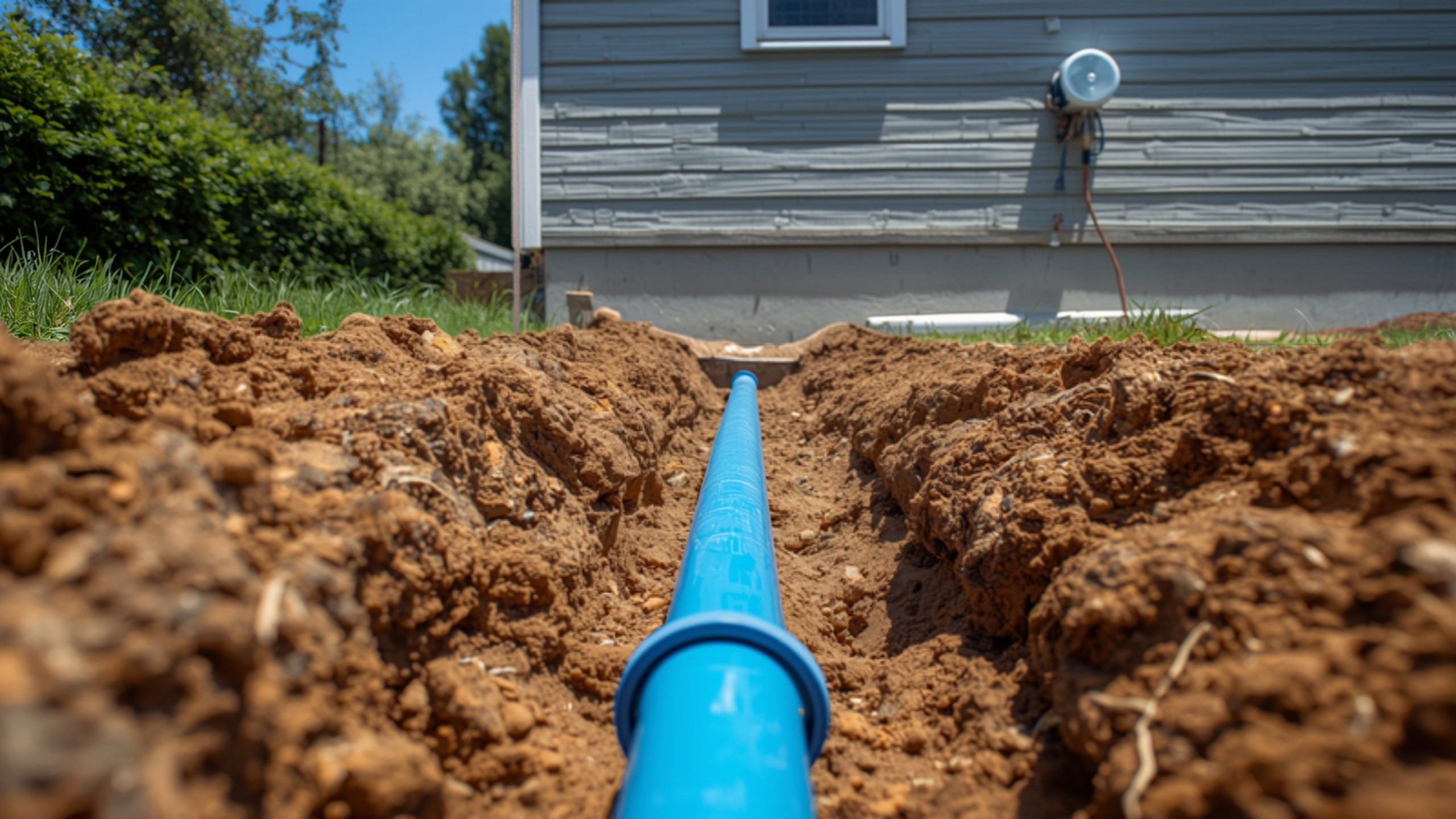
Trenching Distance: The Quiet Cost Driver
Every utility line has to travel from its source to the ADU. The farther the unit sits from the street connections or the main house, the more trenching, pipe and wire you pay for. Long electrical runs can require larger wire, and sewer lines need proper slope over the full distance.
Trenching also has to navigate driveways, tree roots, existing lines and your landscaping. Placing the ADU with utility runs in mind, not just views and privacy, can save real money. Our small ADU floor plans show layouts that keep plumbing compact.
Shared vs. Separate: Side by Side
| Factor | Shared With Main House | Separate Meters / Service |
|---|---|---|
| Up-front cost | Lower: branch lines and a subpanel | Higher: new taps, connection or capacity fees, new service drop |
| Monthly cost | One set of base charges | Additional base charges per account |
| Billing | One bill; splitting is informal | Each unit pays its own |
| Capacity check | Main service must handle both | New service sized for the ADU |
| Best for | Family members, an EFR, a home office | Rentals, long-term flexibility |
| Local rules | Commonly allowed | Depends on jurisdiction (St. Petersburg permits separate meters) |
When Separate Meters Pay Off
Renting it out? Separate meters usually make sense. The tenant pays their own bills, you avoid awkward usage math, and the unit is easier to manage long term. Where rentals are allowed, St. Petersburg permits separate meters and addresses for ADUs. Our post on ADU rental income in Tampa covers the other side of that equation.
Housing family? Shared service is often fine, and it’s the cheaper path. In the City of Tampa, an Extended Family Residence is limited to family members anyway. If you think you’ll rent later, consider sizing conduit and panel space now so separating service down the road is easier.
Budgeting for the Hidden Costs
A quality ADU in Tampa Bay generally runs $175,000–$350,000 all-in, and utility taps and site work can run tens of thousands of dollars before a wall goes up. Utility fees alone can run thousands to tens of thousands depending on what’s required. Every lot is different; get a real number. Our ADU cost guide shows where utilities fit in the overall budget.
If you’re considering a factory-built unit, the utility work is the same. See our comparison of prefab, modular and site-built ADUs.
Frequently Asked Questions
Does an ADU need separate utility meters?
Not always. Many ADUs share water and electric service with the main house, which is cheaper up front. Separate meters make more sense for rentals, and whether they’re allowed depends on your jurisdiction.
How much do ADU utility hookups cost?
It varies widely by lot. Utility fees can run thousands to tens of thousands of dollars, and utility taps plus site work can run tens of thousands before a wall goes up. Get utility fees in writing early.
Can I put an ADU on a property with a septic system?
Possibly. Septic systems are permitted by the Florida Department of Health, and adding a unit or bedroom can require upsizing your tank or drainfield. Check septic capacity early in the process.
Will my electrical panel handle an ADU?
Maybe not. An ADU adds a kitchen, water heater and HVAC, and many older homes need a service upgrade to feed a subpanel. Have an electrician do a load calculation early, or plan for separate TECO service.
Should family members have separate meters?
Usually not. For a parent or other family member, shared service is often simpler and cheaper. If you might rent the unit later, plan conduit and panel space now so you can separate service down the road.
Price the Pipes Before the Paint
Utilities are one of the first things TomCo Solutions looks at on any ADU site, because they shape where the unit goes and what it costs. As a design-build contractor, we coordinate the utility planning with the design from day one. Learn more about our ADU design and construction services.
Schedule a private 30-minute consultation or call (813) 922-2299.
Leave a Reply